Product Team Guru Methodology
A 5-step system from signal to impact
Follow the exact flow used by high-performing product teams: collect signals, identify patterns, prioritize opportunities, align execution, and audit impact.
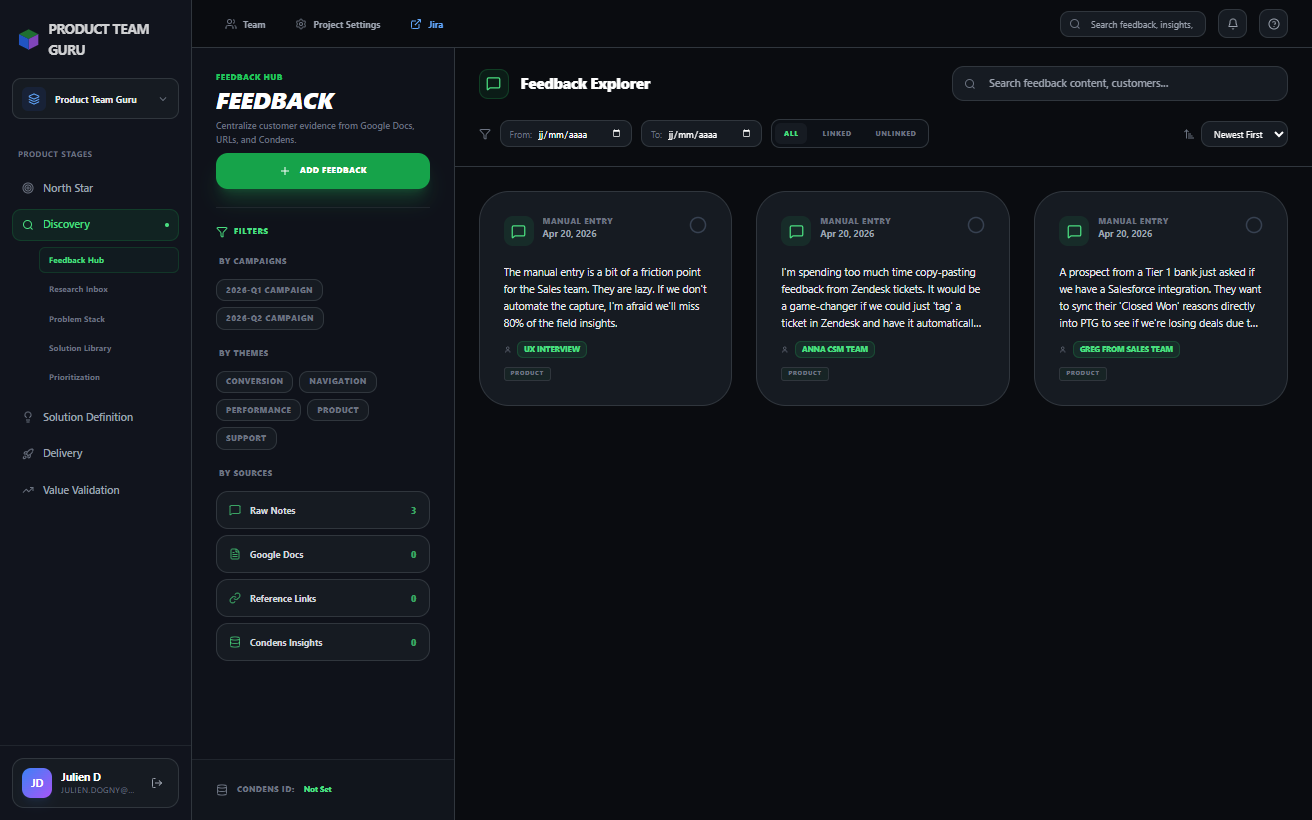
COLLECT · The Feedback Inbox
Centralize every raw signal from Slack, CRM, and Support into one shared source of truth.
Why
When feedback lives in disconnected channels, teams optimize for the loudest request instead of the strongest recurring problem. Centralization removes recency bias and creates strategic clarity.
How
Route incoming messages and tickets into a unified inbox where each signal keeps context, source, and timestamp. Create a clean baseline before interpretation begins.
IDENTIFY · The Insights Engine
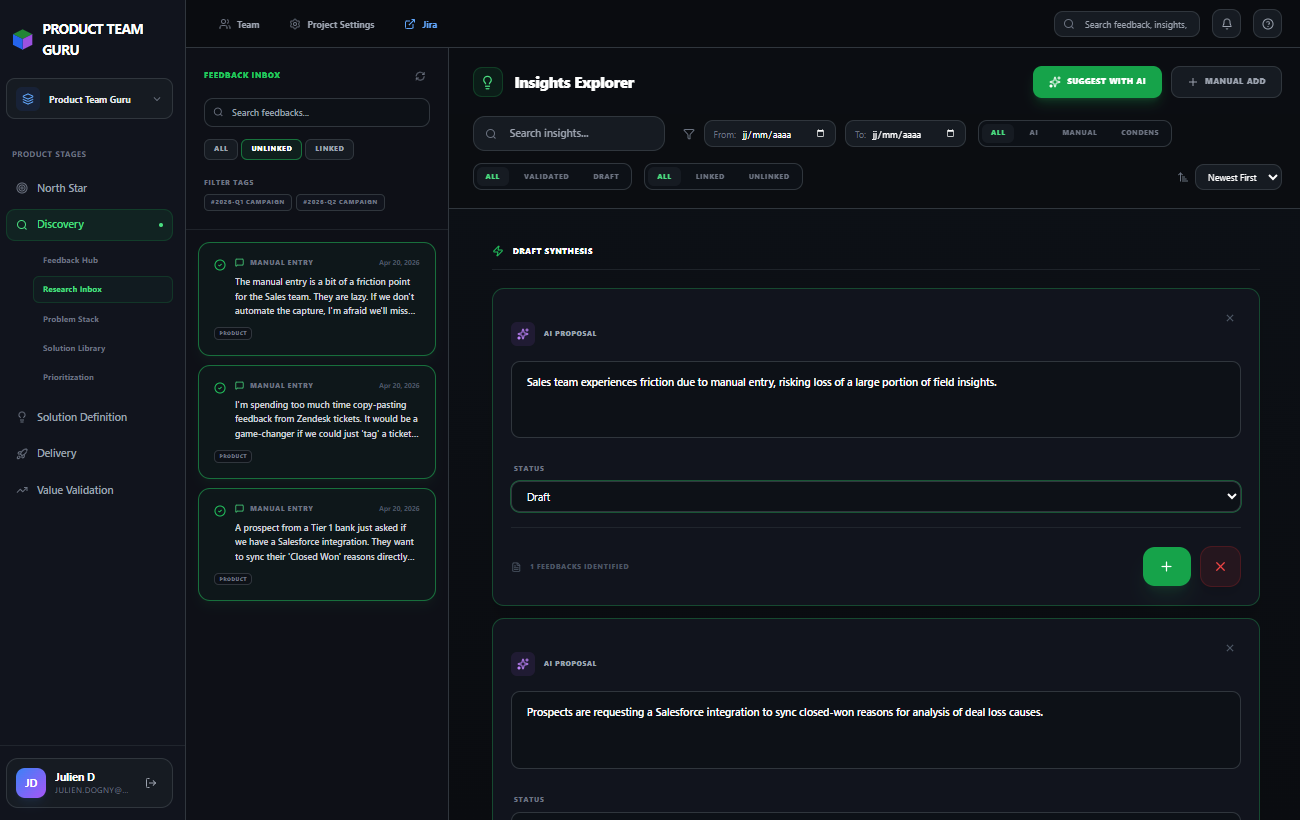
Connect multiple feedback items to a single actionable insight so real patterns emerge.
Why
Isolated comments are noise. Grouped evidence reveals structural user friction and prevents teams from overreacting to one-off anecdotes.
How
Cluster related feedback under shared insight statements, tag recurring themes, and keep traceability back to original user signals for confidence and transparency.
GATHER & PRIORITIZE · The Opportunity Tree
Rank opportunities objectively with the Evidence-based Confidence Score.
Why
Prioritization often gets hijacked by opinions or urgency theater. A confidence-based model aligns teams on proof, not politics.
How
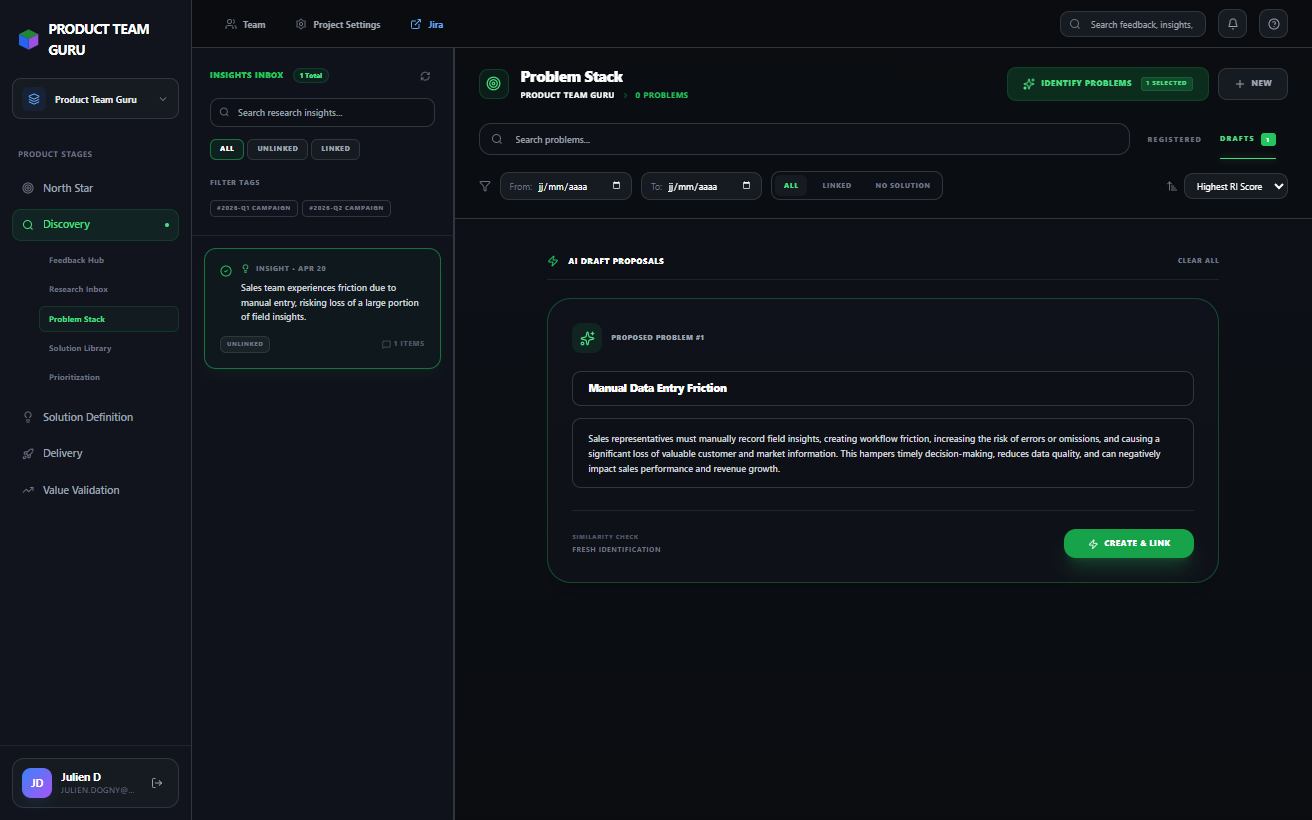
Map insights to opportunities in a tree, score each branch based on evidence quality and impact potential, then compare feature bets with an explicit confidence signal.
DEVELOP · The Execution
Keep discovery decisions and engineering delivery continuously aligned.
Why
Execution drifts when roadmap items lose their original rationale. Alignment preserves intent, reduces rework, and improves cross-functional trust.
How
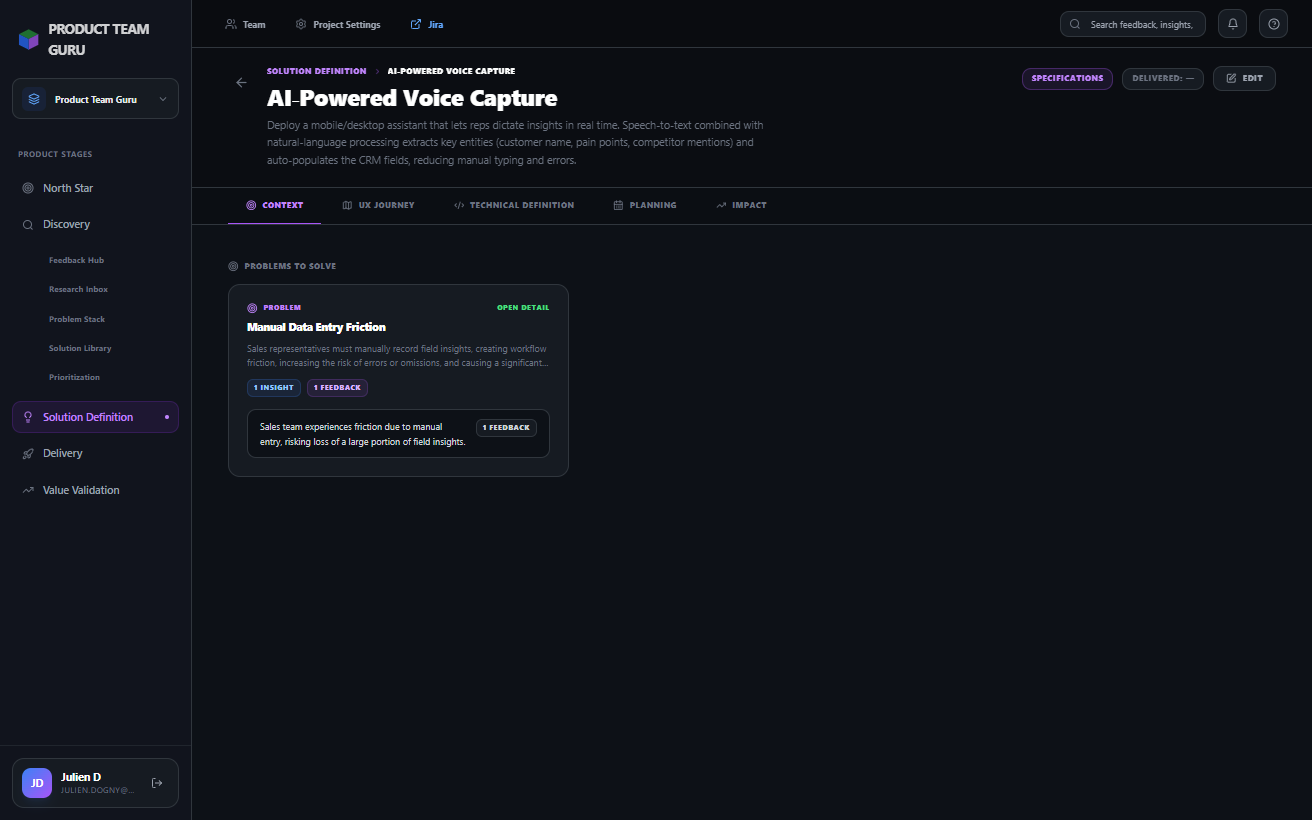
Link each initiative to its problem statement, evidence trail, and expected outcome directly in the delivery workflow so engineering always builds with full context.
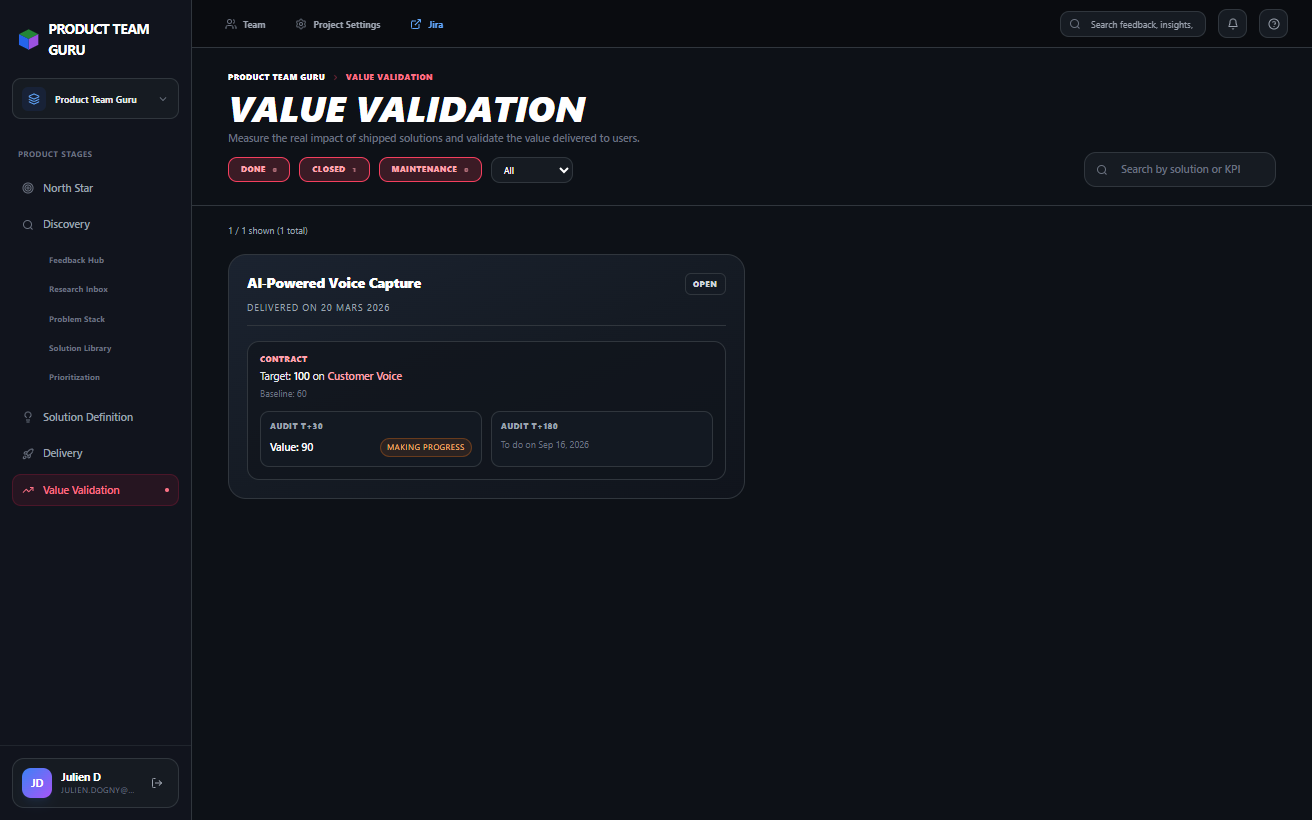
AUDIT · The Impact Loop
Compare predicted versus actual impact 30 days after launch.
Why
Shipping is not success by default. Measuring outcome accuracy creates a learning loop that sharpens future bets.
How
At day 30, review expected KPIs against observed product behavior, document variance, and feed lessons back into discovery and prioritization.